Lakota Quillwork Art and Legend
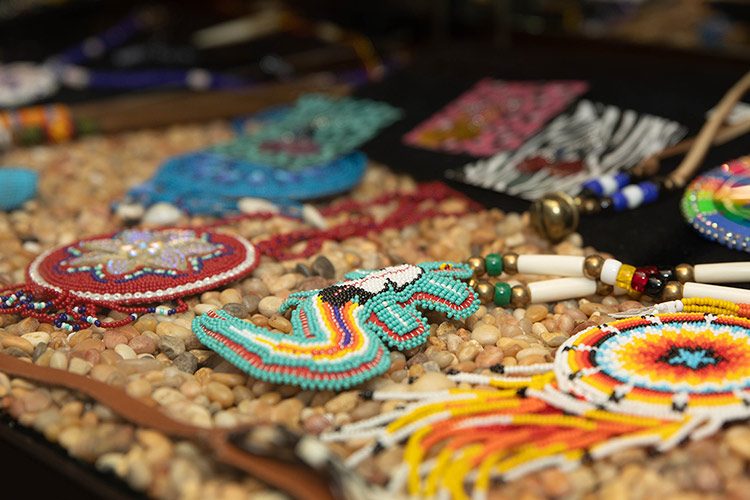
A technique practiced for centuries in many parts of North America, quillwork was the primary form of decoration for the majority of tribes living in areas where the porcupine could be found.
Colored, geometric bands of quills were folded and twisted to make complex patterns on baskets, in jewelry or on gloves. Around 1840, quill working began to decline when native women started using beads to decorate garments.
Full Story
|
 |
 |
 |

Dr. Charles A. Eastman (Ohiyesa)
Ohiyesa was born into the Sioux tribe and lived in the ancient, nomadic way that his ancestors had lived for centuries, free of reservations and the dominant society that was encroaching everywhere on this way.
By the end of his life, he had become a certified MD, had published many successful books read all around the world, had helped establish the Boy Scouts, had worked ceaselessly to promote the wellbeing of American Indian tribes, and had been perhaps the most important force in interpreting for the general public the spiritual depth and greatness of the American Indian tradition, then disappearing rapidly.
Full Story
|
 |
 |
 |

The Lakota Moon Calendar
Native American calendars are different from the traditional twelve month calendars that are primarily used today. Though the type of calendar differed amongst tribes and regions most Native American calendars began in the spring.
This is because Native Americans placed much importance on nature and the earth, and since the spring months were the time of year that new plants and animals were born, it symbolized the beginning of a new year.
Full Story
|